
Toxic lead still persists in Metro Manila air amid fuel crisis and despite interventions
Danika Geronimo, Ateneo Research Communications
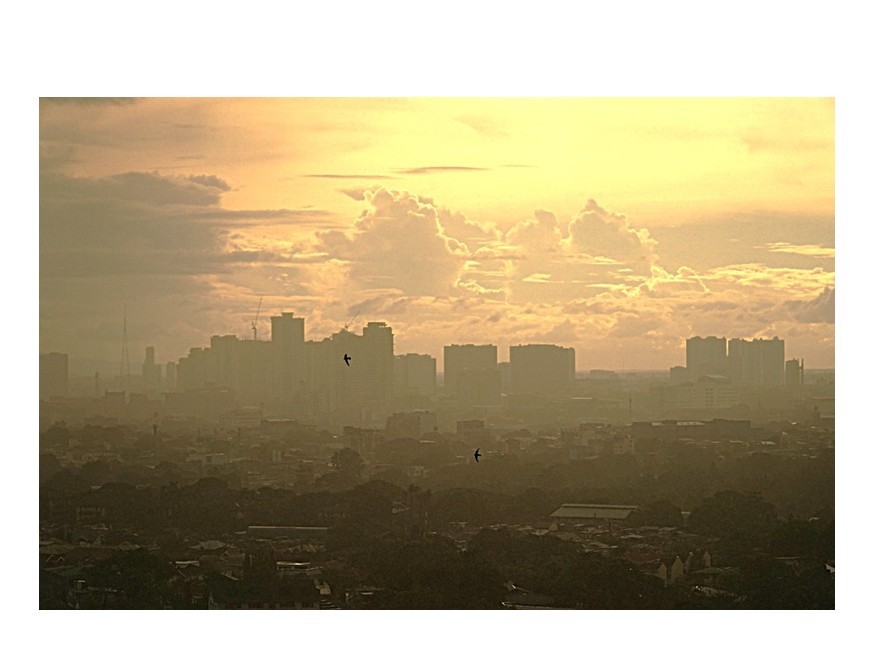
In the Photo. A hazy Metro Manila skyline reflects the persistence of airborne pollution in the Philippine capital. Ateneo de Manila University researchers have recently found that toxic lead remains in the city’s air even decades after the phaseout of leaded gasoline, with major sources including local industrial activity, fossil fuel combustion, and legacy pollution. Much of this lead is carried aloft as particulate matter that can be deeply inhaled, posing particular risks to children and vulnerable individuals and communities. SOURCE: Aaron Vicencio, Ateneo de Manila University. CC BY-NC-SA
Counterintuitively, despite the ongoing fuel crisis and over two decades since the global phaseout of leaded gasoline, toxic lead still lingers in Metro Manila’s air.
By analyzing aerosol data from as far back as 2018 and 2019 using lead isotope fingerprinting, an international team including researchers from the Ateneo de Manila University Department of Physics and the Manila Observatory found that lead pollution has taken on new forms and quietly persists to this day. Their study points to modern industrial activities, fossil fuel combustion, and legacy pollution as key sources of lead pollution in the nation’s capital.
“While the data was collected in 2018 and 2019, the conclusions remain relevant today. This research highlights the importance of monitoring atmospheric lead to ensure that we do not undo the gains from phasing out leaded gasoline,” said Ateneo de Manila University physics professor and study co-author Dr. Maria Obiminda L. Cambaliza.
The phaseout of leaded gasoline removed a primary pollutant, but the study points to industrial processes, such as e-waste recycling and smelting, as other major contributors, accounting for up to 45-62% of atmospheric lead in Metro Manila’s air. Fossil fuel use, including diesel and trace elements in unleaded gasoline, contributes another 30-45%.
“There are now contemporary sources of lead, mainly from industrial activities such as e-waste processing, and fossil fuel combustion, such as from diesel use and unleaded gasoline combustion. Indeed, trace amounts of lead may still come from unleaded gasoline,” Cambaliza underscored.
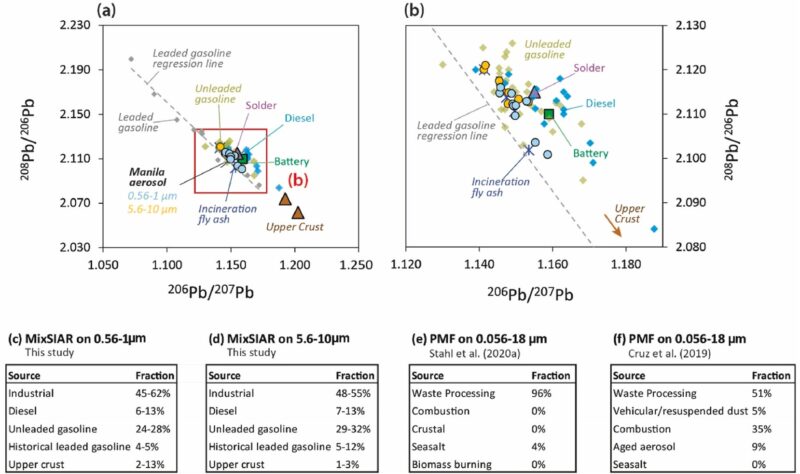
Also, contrary to patterns seen in other Philippine regions, Metro Manila’s pollution is largely from local emissions, persisting year-round regardless of seasonal shifts in wind patterns.
These emissions are embedded in the material conditions of everyday life. As Metro Manila expands, so too do industries and energy systems reliant on fossil fuels, sustaining the motion of urban life.
In this climate of geopolitical instability, surging global oil prices may delay the transition to clean energy, discourage proper vehicle maintenance, and heighten public exposure to toxic emissions. This current situation traps communities in a cycle of economic pressure and environmental harm that intensifies each other.
The health concern is as critical: lead is heavily concentrated in fine particulate matter that can be inhaled deeply into the lungs and absorbed into the bloodstream. This poses particular danger to children, who are vulnerable to lasting developmental and neurological harm. Globally, one in three children already has elevated blood lead levels, yet the Philippines has not updated its national monitoring in nearly twenty years.
“The conclusions in the paper remain relevant today, even though the data were collected in 2018 and 2019. This research highlights the importance of monitoring atmospheric lead to ensure that we do not undo the gains from phasing out leaded gasoline,” Cambaliza stressed.
Without sustained intervention to address these emerging issues, the public health achievements of the past remain vulnerable to reversal amid increasing global uncertainty.
The persistence of lead in Metro Manila’s air serves as a reminder that environmental progress is not a finished chapter but a matter of continued vigilance. #
SOURCE: https://archium.ateneo.edu/atmospheric-physics-lab/1/
Mengli Chen, Jariya Kayee, Armin Sorooshian, Grace Betito, Paola Angela Bañaga, Rachel Braun, Maria Obiminda Cambaliza, Melliza Templonuevo Cruz, Alexander MacDonald, James Bernard Simpas, Connor Stahl, Iravati Ray, Reshmi Das, Zunya Wang, and Xianfeng Wang published their study, Lead sources detected in Manila’s air after the phase-out of leaded gasoline in February 2026 in the Atmospheric Environment journal.