MarSU Research holds workshop during year-ender for updated Manual of Operations
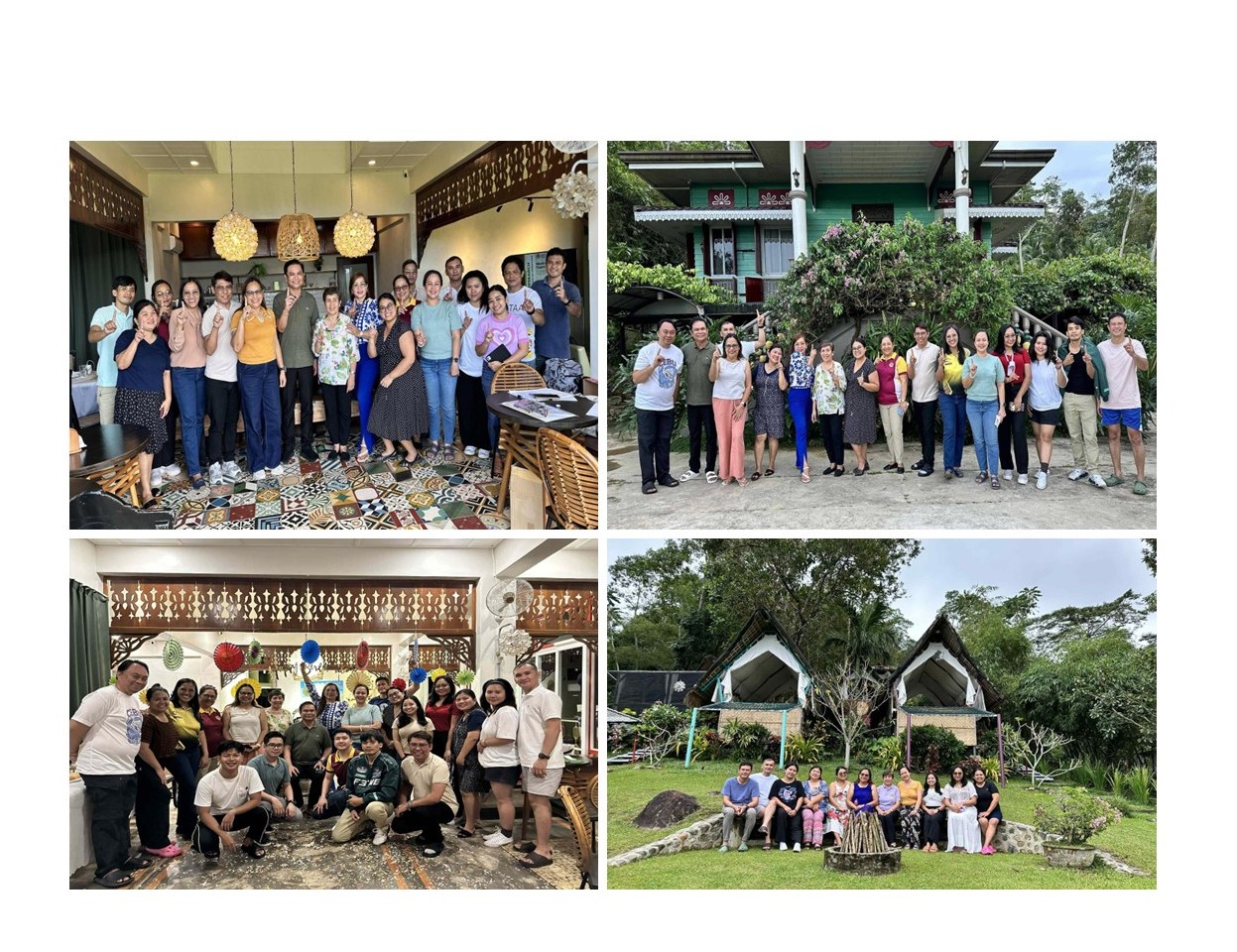
Sta. Cruz, Marinduque – The Marinduque State University (MarSU) Research, Extension, and Training department wraps up the year with an update of the Marinduque State College (MSC) Research Manual of Operations at Panuluyan Farmstay last December 12 and 13.
The in-house facilitators conducted four phases of updating from phase 1 to 4, with preparation and orientation on Day 1 to establish the scope, timeline, and foundational principles for the revision. The MarSU Research and Extension Vice President and Research Council chair opened the update with a welcome and opening message. Then the MarSU Research Director presented the current manual with key sections to be revised, such as vision, mission, research and development agenda, policies, enumerations, and identified gaps. The participants were grouped into four to facilitate the MarSU Strategic alignment vis-à-vis the new MarSU vision and mission, and how the R&D agenda based on the most recent in-service training for interdisciplinary centers is to be institutionalized and reflected. Then they reviewed the external mandarins from the agencies including the Department of Science and Technology (DOST), Commission on Higher Education (CHEd), Department of Health (DOH), Department of Agriculture (DA), Department of Environment and Natural Research (DENR), Department of Trade and Industry (DTI), Department of Information and Communications Technology (DICT)) and new national R&D priorities based on the Harmonized National Agenda.
Phase 2 ensued with the sectional review and analysis, with the objective of conducting a detailed, section-by-section review of the current manual based on the updated institutional and national mandates. The working group focused on the following areas: group 1 on vision, mission, and core values; group 2 on R&D management and policies; and group 3 on monitoring, evaluation, and remuneration. The five interdisciplinary centers are as follows: Health, Food and Nutrition Security; Sustainability, Resilience and Environmental Justice; Creative Industries and Tourism; Digitization and Innovation; and Quality Education and Lifelong Learning. Then the respective group had a breakout session with each group leader to draft the analysis report for assigned sections, identifying provisions to retain, to revise, determine new provisions needed, and if ever there are policy conflicts or ambiguities.
They proceed to phase 3 with drafting of new/ revised content, with the main objective to draft the new text for revised policies and new provisions based on phase analysis. They had a plenary presentation and discussion, followed by a content drafting session. Each group presented its analysis and initial recommendations. During the plenary discussion, to resolve major issues and ensure the inter-section consistency. After this was done, the drafting of the actual revised text was undertaken by focusing on clarity, conciseness, and adherence to the principles of a “Research-driven university” and total quality management system.
The last phase, consolidation and next steps with the objective of consolidating the draft, plan for final validation and establishing the finalization. The research department composed of coordinators from different MarSU constituent colleges, drafted the review and formatting, planning for validation and finalization of the timeline. The group also considered reviewing the consolidated draft for consistency in language, format, and adherence to the MarSU Manual’s prescribed format. They also scheduled stakeholder consultations with the faculty, staff, and students, and a final review by the RECO. Then they ended with an agreed-upon time for the Board of Regents submission and approved resolution.
The year-ender was not complete without some rest and recreation with fun games and activities participated in by no less than the MarSU President and key officials. The research group was invigorated and motivated to do well for the coming year and the opening of the second semester. # Randy T. Nobleza, Ph.D.