City Health Officers issue Food Safety Advisory for the Upcoming Holy Week
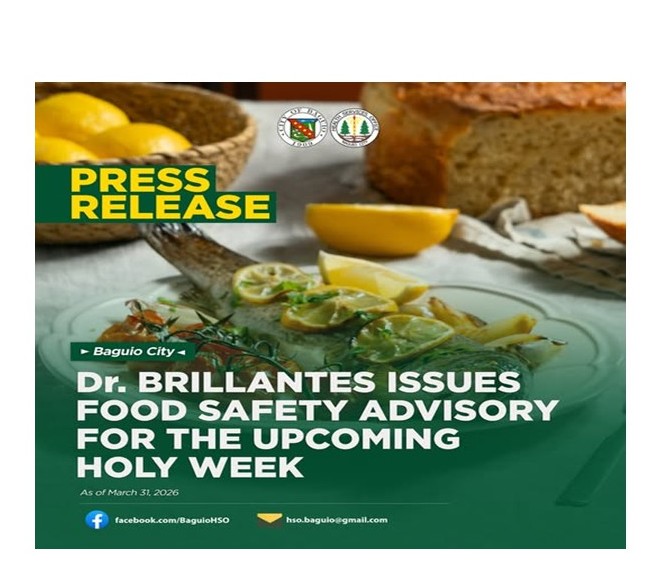
BAGUIO CITY — As the City of Pines prepares for the observance of Holy Week, City Health Officer Dr. Celia Flor Brillantes is reminding residents and visiting pilgrims to practice strict food safety protocols during the long holiday break.
With many families traditionally opting for seafood-based diets and preparing meals for outdoor picnics or long-distance travel, the risk of foodborne illnesses increases as temperatures rise.
“Holy Week is a time for reflection and family, but it might also be a period where we see a rise in food-related health issues due to improper storage and high ambient temperatures,” said Dr. Brillantes. “We want our citizens and visitors to focus on their spiritual observance without the interruption of preventable illness.”
To ensure a safe and healthy Holy Week, the Baguio City Health Services Office (CHSO) issues the following guidelines:
𝗦𝗽𝗲𝗰𝗶𝗮𝗹 𝗙𝗼𝗰𝘂𝘀 𝗼𝗻 𝗦𝗲𝗮𝗳𝗼𝗼𝗱 𝗦𝗮𝗳𝗲𝘁𝘆
• 𝗙𝗿𝗲𝘀𝗵𝗻𝗲𝘀𝘀 𝗖𝗵𝗲𝗰𝗸: When purchasing fish for the Lenten season, ensure eyes are clear and bulging, gills are bright red, and the flesh is firm to the touch.
𝗪𝗵𝘆? Fish degrade rapidly after death. Clear, bulging eyes and bright red gills indicate recent catch and high oxygen levels in the blood at the time of harvest. Firm flesh means the muscle fibers haven’t begun to break down through autolysis (self-digestion by enzymes) or bacterial putrefaction, which can cause histamine poisoning.
• 𝗦𝗵𝗲𝗹𝗹𝗳𝗶𝘀𝗵 𝗖𝗮𝘂𝘁𝗶𝗼𝗻: Only buy shellfish from sources that are red-tide-free.
𝗪𝗵𝘆? Filter-feeding shellfish (like mussels and oysters) can concentrate toxic algae during “red tide” blooms. These toxins are heat-stable, meaning cooking does not kill them. Consuming contaminated shellfish can lead to Paralytic Shellfish Poisoning (PSP), which affects the nervous system.
• 𝗣𝗿𝗼𝗽𝗲𝗿 𝗧𝗵𝗮𝘄𝗶𝗻𝗴: Do not thaw frozen fish or seafood on the counter at room temperature. Thaw them in the refrigerator or under cold running water to prevent bacterial growth.
𝗪𝗵𝘆? Bacteria on the surface of frozen seafood can “wake up” and multiply while the center is still frozen if left on a counter. Thawing in the refrigerator keeps the food at a constant, safe temperature (below 4°C), preventing the surface from entering the “Danger Zone.”
𝗦𝗮𝗳𝗲 “𝗕𝗮𝗼𝗻” 𝗳𝗼𝗿 𝗧𝗿𝗮𝘃𝗲𝗹𝗲𝗿𝘀 𝗮𝗻𝗱 𝗣𝗶𝗹𝗴𝗿𝗶𝗺𝘀
• 𝗧𝗵𝗲 𝗧𝘄𝗼-𝗛𝗼𝘂𝗿 𝗥𝘂𝗹𝗲: Do not leave cooked food out for more than two hours. If you are heading to Visita Iglesia or outdoor sites, use insulated coolers with ice packs.
𝗪𝗵𝘆? This is the maximum window of time for “perishable” foods. Pathogenic bacteria like Staphylococcus aureus or Salmonella can double in number every 20 minutes at room temperature. After two hours, the bacterial load may reach a level high enough to cause infection.
𝗔𝘃𝗼𝗶𝗱 𝗛𝗶𝗴𝗵-𝗥𝗶𝘀𝗸 𝗜𝗻𝗴𝗿𝗲𝗱𝗶𝗲𝗻𝘁𝘀: For packed meals (baon), avoid dishes with coconut milk (gata) or mayonnaise, as these spoil quickly in the heat.
𝗪𝗵𝘆? Foods with high moisture and protein content (like coconut milk) or those that are pH-neutral are perfect breeding grounds for bacteria. In the Philippine heat, these ingredients ferment or spoil significantly faster than “dry” or acidic foods (like Adobo), especially this coming summer season.
• 𝗛𝗮𝗻𝗱 𝗛𝘆𝗴𝗶𝗲𝗻𝗲 𝗼𝗻 𝘁𝗵𝗲 𝗚𝗼: If soap and water are unavailable during travel, ensure you carry a 70% alcohol-based sanitizer and use it before handling any food.
𝗪𝗵𝘆? During Holy Week pilgrimages or travel, hands come into contact with many high-touch surfaces (public transport, pews, railings). Fecal-oral transmission is the primary route for many foodborne illnesses; 70% alcohol effectively denatures the proteins of the most common pathogens when soap isn’t available.
𝗕𝗲 𝗿𝗲𝗺𝗶𝗻𝗱𝗲𝗱 𝗯𝘆 𝗙𝗔𝗧𝗢𝗠 𝘁𝗼 𝗮𝘃𝗼𝗶𝗱 𝗳𝗼𝗼𝗱 𝘀𝗽𝗼𝗶𝗹𝗮𝗴𝗲
𝗙𝗼𝗼𝗱 – What type of food will you be bringing
𝗔𝗰𝗶𝗱𝗶𝘁𝘆 – the more acidic the food, the longer it will last before it spoils
𝗧𝗲𝗺𝗽𝗲𝗿𝗮𝘁𝘂𝗿𝗲 – the higher the temperature, the more likely food will spoil faster
𝗢𝘅𝘆𝗴𝗲𝗻 – the lesser oxygenated the food is, the longer it will last before it spoils
𝗠𝗼𝗶𝘀𝘁𝘂𝗿𝗲 – the drier your food is, the longer it will last before it spoils
𝗪𝗔𝗧𝗘𝗥 𝗦𝗔𝗙𝗘𝗧𝗬
• 𝗛𝗼𝘂𝘀𝗲𝗵𝗼𝗹𝗱𝘀 𝗮𝗻𝗱 𝗧𝗿𝗮𝘃𝗲𝗹𝗲𝗿/𝗧𝗼𝘂𝗿𝗶𝘀𝘁𝘀 – get/buy drinking water from legitimate drinking water stations (make sure their permits are displayed and up to date)
“As we welcome many visitors to our city this week, we also remind our local food establishments to maintain the highest sanitation standards, lets #Breathe a Healthier Baguio” Dr. Brillantes added.
For health emergencies, call 911 or go to the nearest hospital. For food safety concerns, the public is encouraged to contact the Barangay concerned, or the Baguio City Health Services Office. #