Barangays complete hazardous waste IEC

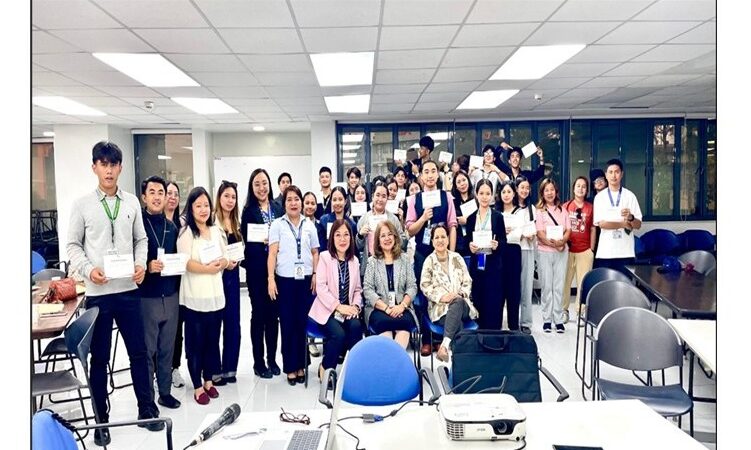
Fifty-two barangays from districts 4, 9, 10, 15, 17, 18, 19 and 20 underwent the hazardous waste Information and Education Campaign (IEC) presented by the City Environment and Parks Management Office (CEPMO) Wastewater and Hazardous Waste Management Division (WHWMD) personnel at the Brookspoint barangay hall, Friday, Nov. 28.
With this development, all barangays are now educated on the proper handling, management and disposal of hazardous waste, grease and used oil, and Waste Electronic and Electrical Equipment (WEEE) or e-waste; through lectures by either CEPMO Assistant head Engr. Marivic Empizo and/or WHWMD head Engr. Wilbur Suanding during the past few months.
Hazardous waste are those without any safe commercial, industrial, agricultural or economic usage, shipped, transported from any country for dumping or disposal or in transit through any part of the Philippines; or by or side products, residues, or contaminated plant or discards which are ignitable, corrosive, reactive and toxic.
The characteristics and types of hazardous waste were presented by Engr. Suanding during the Nov. 28 session; some are common such as Acids, Alkali, with inorganic chemicals, inks, dyes, paints, adhesives, organic sludge, solvents, used or waste oil, vegetable oil, containers previously containing toxic chemical wastes, stabilized waste, Polycholorinated Biphenyl (PCB), pathogenic and infectious wastes, pharmaceuticals and drugs, e-wastes and miscellaneous.
Such wastes are generated from junk shops, auto-repair shops, car wash, school laboratories, hospitals and clinics, manufacturing companies, malls, hotels, restaurants, households and Small and Medium Enterprises (SMEs).
The hazards of e-wastes were detailed by Engr. Suanding whereas water and air are contaminated by Lead, Mercury, Cadmium and Polycyclic Aromatic Hydrocarbons, and renders even the soil unproductive; while human health specifically the reproductive organs, lungs, skin, bladder, kidneys, and digestive system are affected, or carcinogenic growth may be observed due to WEEE exposure.
Suanding emphasized the importance of proper management of WEEE, through the Bakakeng Central Treatment, Storage and Disposal – Materials Recovery Facility (TSD-MRF) wherein 2,924kg of household e-waste were collected on Nov. 19, 2022; and 2,231kg collected on June 30, 2023 in partnership with the academe.Collections are done in the barangays, in the academe, and sustainability fairs on a monthly schedule.
Bulk household e-wastes may also be scheduled and collected by CEPMO, in coordination with the barangay concerned; at cp # 0961-028-8791, 0948-790-8307 or 0907-154-6160.Pollution Control Officer (PCO) Engr. Ronaldo Ballecer who looks over the e-waste collection, treatment and proper disposal is also working closely with the Department of Environment and Natural Resources – Environment Management Bureau (DENR-EMB) for the hazardous waste ID, wherein approval would redound to collection of household grease and used oil by the city with approved standards such as container and seal for the hazardous waste.
To ensure safety and location, the storage area shall be inspected by DENR-EMB.
Meanwhile, intensive IEC and scheduled collection of hazardous waste continues in the grassroots, academe and establishments, with the impending approval of the Hazardous waste ordinance, at the city council. – JGFianza