Reorganized ICAD in Cordillera Underway as RICAD Convenes Agency Members
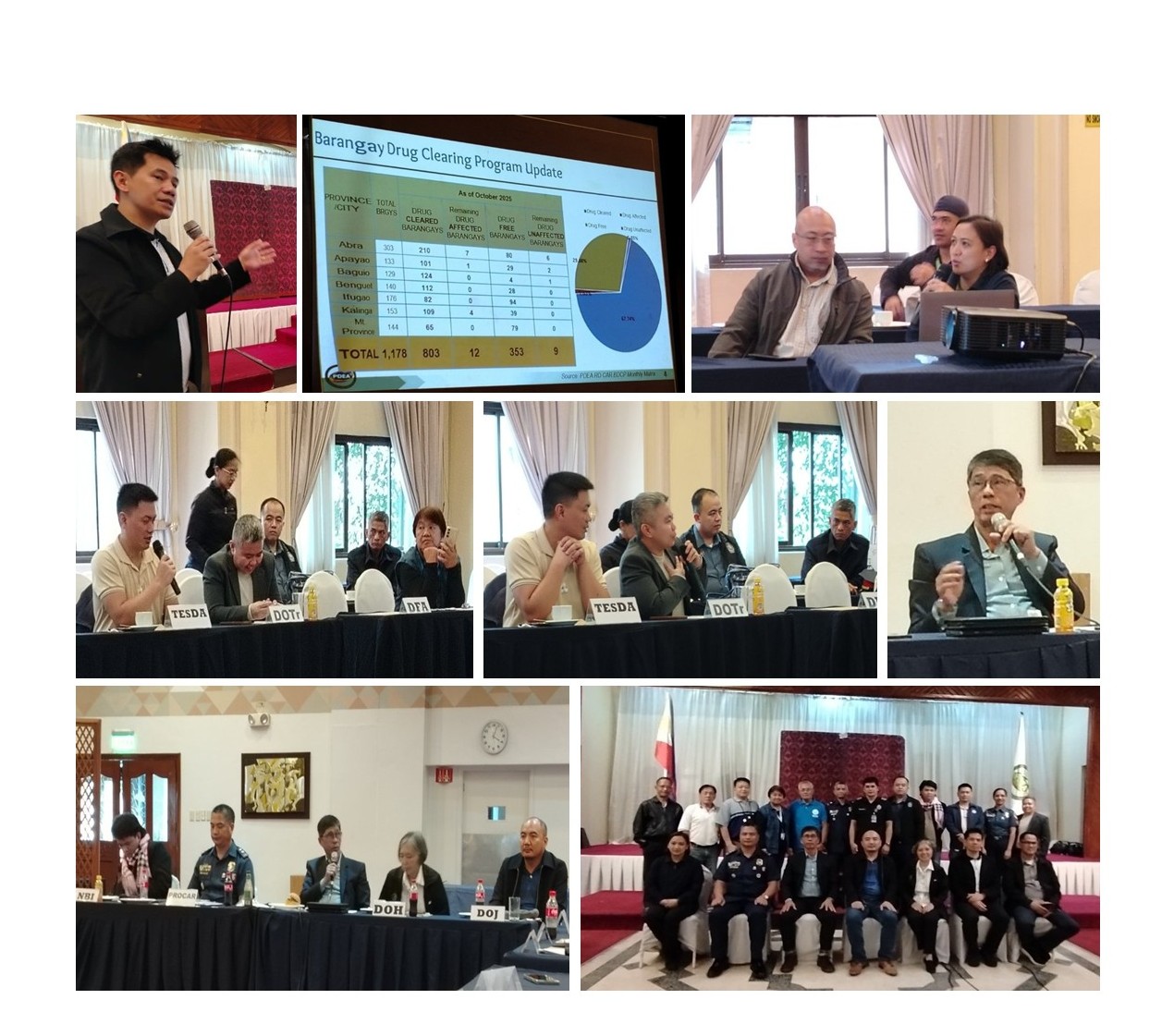
Photo by: Mario D. Oclaman //FNS
BAGUIO CITY – The Regional Inter-Agency Committee on Anti-Illegal Drugs (RICAD) convened a special meeting with former members of the Inter-Agency Committee on Anti-Illegal Drugs (ICAD) to discuss the reorganization and reactivation of ICAD in the Cordillera region.
The meeting was led by Charlton John C. Carame, Chief of the Plans and Operations Division, who presented the current drug situation and the latest Barangay Drug Clearing Program update in Cordillera as of October 2025.
According to the latest data, the region has 1,178 barangays, of which:
803 are Drug-Cleared Barangays
12 remain Drug-Affected Barangays
353 are Drug-Free Barangays
9 are Drug-Unaffected Barangays
Carame emphasized the need to revitalize ICAD’s mechanisms due to the inactivity of several member-agencies that previously carried out key functions. Without the full participation of partner agencies such as the PNP and NBI, centralized reporting and joint operations had diminished. He stressed that PDEA operatives are no longer deployed without PNP or NBI support, making renewed collaboration essential.
The reactivation will also include strengthened participation from both public and private agencies, including local government units and civil society organizations accredited by PDEA to help implement the government’s anti-illegal drug campaign.
Several ICAD clusters that were previously created have already been organized, each with a specific mandate. These include the Enforcement Cluster, Justice Cluster, Advocacy Cluster, and Rehabilitation and Reintegration Cluster.
We must revitalize ICAD,’ says PDEA–CAR Regional Director Francia
PDEA–CAR Regional Director Martin R. Francia, who chairs the RICAD, underscored that Malacañang has directed all agencies to strengthen inter-agency coordination and support one another based on their mandates.
“We are instructed to revitalize, reorganize, and strengthen ICAD from now on. I ask for your support so we can make the Regional ICAD fully active again—not only because it is required by the executive order, but because our agencies cannot fulfill our functions alone. We must work together,” Francia said.
Addressing the region’s drug situation, Francia noted that while marijuana cultivation remains prevalent in certain areas in Cordillera, consumption is mostly traced to lowland regions. However, Cordillera continues to be consistently mentioned at the national level as a source of cannabis.
“Every time we meet in the central office, they mention that shabu comes from China or Myanmar. But when it comes to marijuana, it is either from Mexico, Thailand, or Cordillera,” he said.
“That is why this ICAD is essential. It is a group of agencies that must work together to finally suppress marijuana cultivation.”
Francia concluded with a call for unity, emphasizing that the success of anti-illegal drug initiatives depends on the collective effort of all agencies under ICAD. # Mario Oclaman //FNS