President Marcos Jr. convenes Philippine Space Council, approves programs on satellite development, and key space initiatives

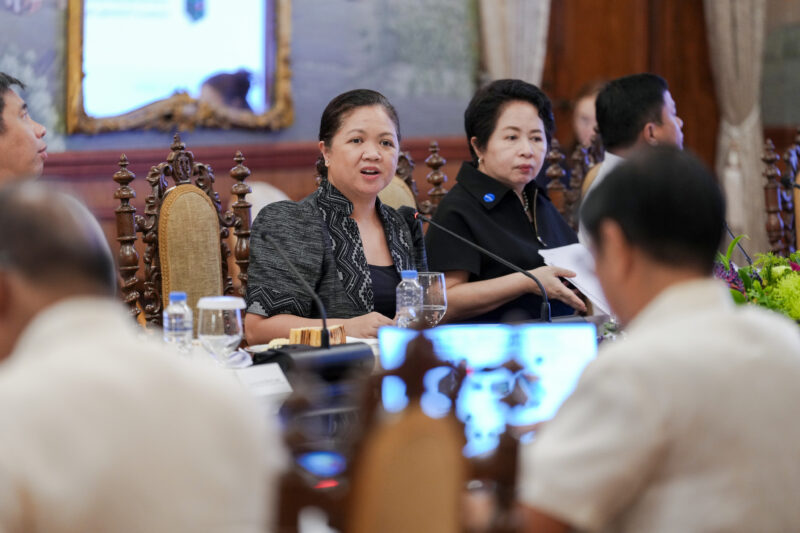
In the Photo. President Ferdinand R. Marcos Jr., during the 9th PSC meeting. Photo credit: Presidential Communications Office
(04 June 2026, Malacañang Palace, Manila) President Ferdinand R. Marcos Jr. presided over the 9th Philippine Space Council (PSC) meeting on Tuesday and set plans to strengthen the country’s space capabilities through satellite development and space data utilization.
As the Head Secretariat and Presidential Adviser on Space Matters, Philippine Space Agency (PhilSA) Ad Interim Director General Gay Jane P. Perez, Ph.D., reported on the progress of the Multispectral Unit for Land Assessment (MULA) satellite, the Philippines’ most advanced satellite to date, with a possible launch in April 2027 aboard SpaceX’s Transporter-20. Data from MULA will support agriculture, maritime monitoring, disaster risk reduction and management (DRRM), and national security applications.
MULA is now fully built and is undergoing space environment testing in the UK to verify that it meets technical and mission assurance requirements. Should tests reveal any anomalies, these will be resolved, and the satellite will be retested accordingly. As this is an iterative process, it may result in adjustments to the satellite development schedule.
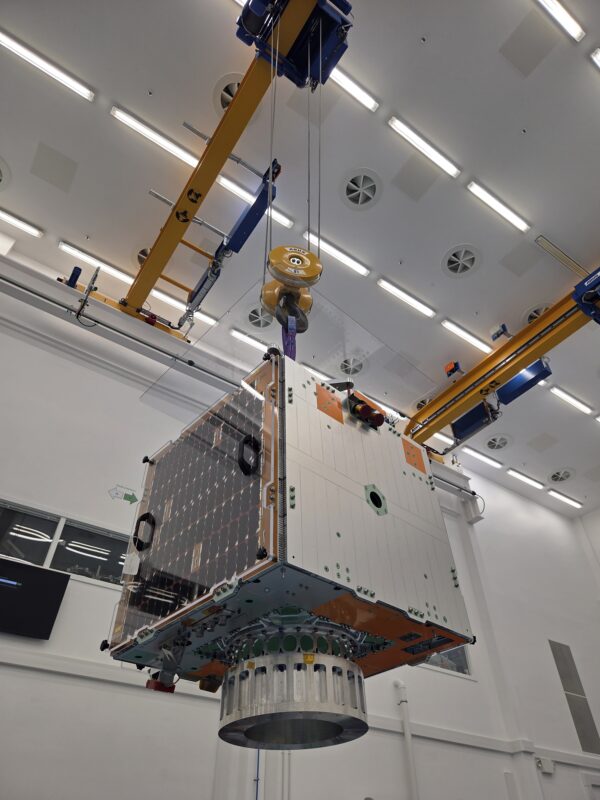
Recognizing the importance of building the local space economy, the development of the MULA constellation was approved as a national priority. This will enable the production of more MULA satellites through the license, allowing the Philippines to rebuild MULA locally.
“PhilSA proposes to build a MULA constellation, composed of follow-on satellites developed and integrated domestically, to secure long-term continuity and improved availability of Earth observation data for government users. This will anchor the maturation of a Philippine space industry and establish a nationally owned and operated Earth observation capacity commensurate with the country’s strategic requirements,” explained Dr. Perez on how multiple satellites would allow more frequent revisits and provide impetus for local satellite manufacturing.
The resolution on the establishment of a Philippine geostationary telecommunications satellite was also approved to provide a reliable and resilient communications network for the country, especially as a critical backup to terrestrial networks during emergencies. This will ensure public safety, connectivity, and the continuity of critical government services.
Further boosting the country’s capabilities, the launch of the first liquid-fuelled rocket from the Philippines is targeted for early next year from Lal-lo Airport in Cagayan. The launch will demonstrate a domestic propellant supply chain as well as safety procedures and launch authorization for local rocket launches. These activities are initial steps towards the establishment and operation of a Philippine spaceport. With the Pacific Ocean to its east and its proximity to the equator, the Philippines is well-positioned for safe and secure rocket launch and recovery operations, helping to reduce costs, improve launch efficiency, and create opportunities for future space activities.
Aligned with the President’s directive to ensure accessible and effective use of satellite data through sustained partnerships, a resolution on the harmonization of satellite data requirements was also passed, streamlining utilization of satellite-derived data for national infrastructure planning, programming, monitoring, and evaluation. PhilSA has also been contributing space data to increase transparency and accountability in the government. Satellite images have been provided to support the Office of the Ombudsman’s investigation of flood control projects.
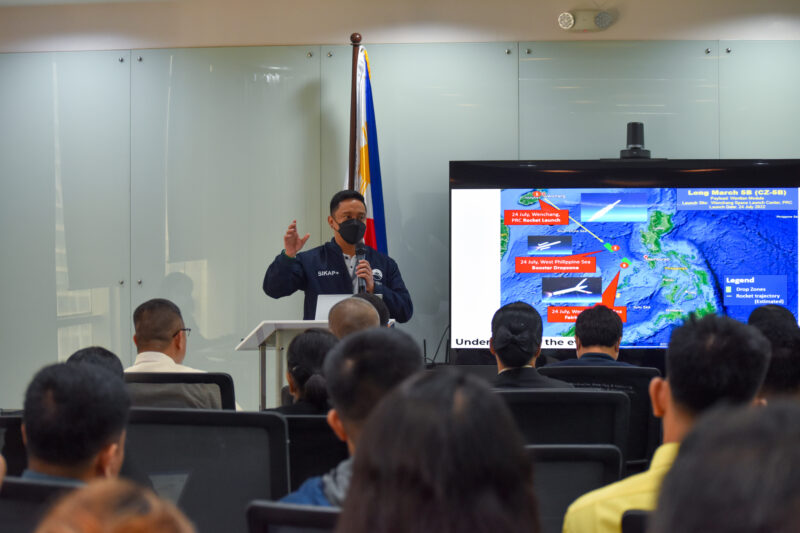
With the increase in space vehicles launched internationally, the establishment of a national response protocol on space debris was passed. Likewise, the interagency technical working group (TWG) on orbital debris will also continue its work in handling debris-related matters.
Present during the meeting was Council Co-Vice Chair, Secretary of Science and Technology Renato U. Solidum, Jr, joined by council members House Chairperson on Science and Technology Hon. Julio A. Ledesma IV, Secretary of Development, Economy, and Planning, Arsenio M. Balisacan, Secretary of Trade and Industry Ma. Cris Aldeguer-Roque, Secretary of Information and Communications Technology, Henry Rhoel A. Aguda, including council representatives from the Department of Foreign Affairs (DFA), Undersecretary Maria Andrelita S. Austria, Department of Finance (DOF), Undersecretary Maria Edita Z. Tan, Department of National Defense (DND) Undersecretary Fabian M. Pedregosa, Department of Environment and Natural Resources (DENR) Undersecretary Augusto D. dela Peña, and Department of Agriculture (DA) Assistant Secretary Allen Kristopher A. Anarna.
The PSC was created under the Philippine Space Act, RA 11363, and is the principal advisory body for coordinating and integrating policies, programs, and resources related to space science and technology applications. Under the law, the PSC shall approve the implementation of Philippine space policies in accordance with international conventions, ensure the appropriate allocation of resources to support PhilSA’s performance of its mandate, and approve strategic directions and decisions for the implementation of PhilSA. #