
Ateneo spearheads international cooperation for future light-based electronics
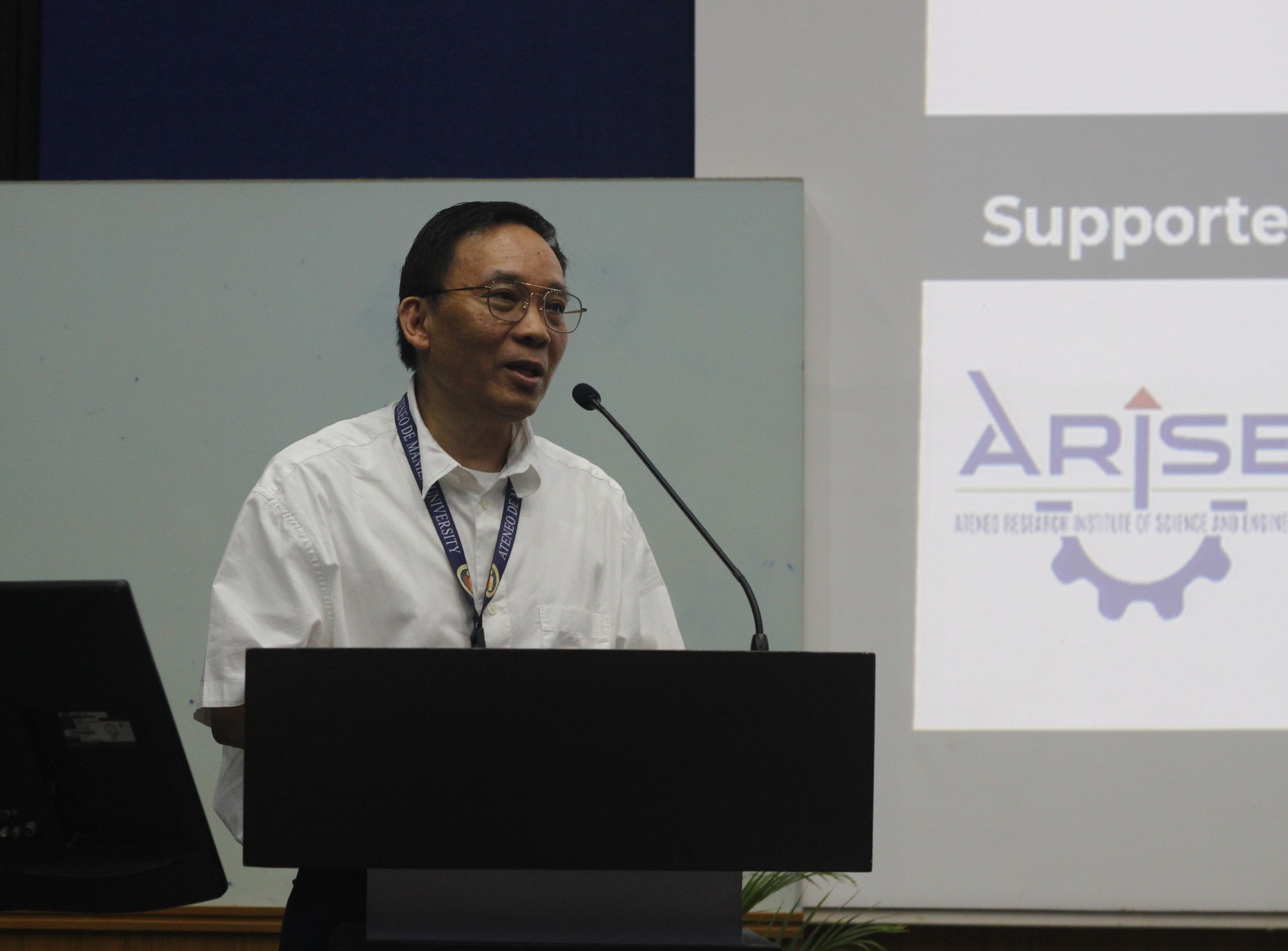
Photonics—the next generation of electronics technology, which uses light instead of electricity—is gaining a foothold in the Philippines thanks to the Ateneo de Manila University’s Research on Optical and Electronic Systems (ROSES) Laboratory, the country’s first and only facility dedicated to locally designing Photonic Integrated Circuits (PICs) and training PIC designers.
Established by physicist Dr. Benjamin B. Dingel in 2017, the ROSES Lab grew from a volunteer effort to bolster Ateneo’s research capacity into what is now the Philippines’ leading center for optical sciences and photonics engineering. It is now positioning itself as a driver of international collaboration in photonics research and innovation.
To date, the Ateneo ROSES Lab has over 85 scientific publications and support from the Philippine Department of Science and Technology – Philippine Council for Industry, Energy and Emerging Technology Research and Development (DOST-PCIEERD), the Ateneo Research Institute of Science and Engineering (ARISE), and various global partners. This sets the stage for the Philippines to play a key role in the development of future computers, smartphones, telecommunications systems, medical devices, and other advanced technologies. Already, photonics is poised to be implemented in the near future in hybrid systems that combine electronic and optical technologies for optimized performance.
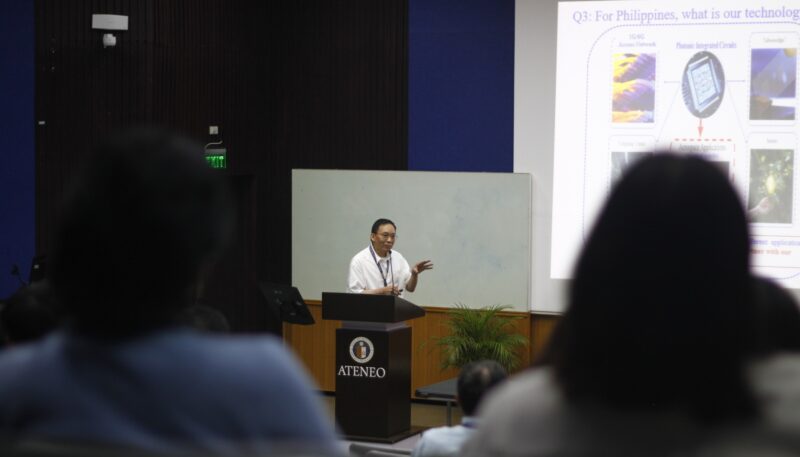
Dingel’s vision of collaboration and technological shift was underscored at the Workshop on Advanced Photonics Technologies for Emerging ICT and Sensing Applications held on 20 February 2026 at Escaler Hall, inside the Ateneo de Manila University’s Loyola Heights campus.
The workshop convened leading researchers from Japan, Thailand, Taiwan, and the Philippines under initiatives such as the DOST-PCIEERD’s e-Asia Joint Research Program (JRP) and Japan’s NICT’s ASEAN IVO JRP. Participating institutions included Waseda University, National Institute of Information and Communications Technology, Chiang Mai University, Thai Microelectronics Center, and industry partner Xinyx Design and Consultancy Services Incorporated.
Dingel emphasized that the ROSES Lab aims to serve as a satellite hub for global partnerships and is actively expanding its objectives to foster international R&D and innovation collaborations. “If we continue with our current technology, then we are already left behind. We can never move forward and compete. So, our laboratory takes an experimental side, in which we try to be as open as possible to outside collaborations,” he explained.
“The Ateneo ROSES Laboratory is a great and important step forward for research in optical science and engineering in the Philippines. It embodies the Ateneo de Manila University’s long-standing commitment to build local capability and strengthen research and development in photonics, which has the potential to produce revolutionary change,” said Dr. Filomeno Aguilar Jr., Ateneo de Manila University Assistant Vice President for Research, Creative Work, and Innovation, in his opening remarks.
Calling for deeper collaboration among Philippine universities, the ROSES Lab continues to seek and nurture talent to help advance both Ateneo and the nation– especially in PIC design, an area where the Philippines leads in design expertise but lags in fabrication and technology assimilation. According to Dingel, with dynamic collaboration, the country remains well-positioned to make significant technological leaps in the years ahead. #