
Better Air Quality conference 2026 calls for stronger investment, regional cooperation, and accelerated action for clean air

Bangkok, Thailand — 13 March 2026 — More than 850 policymakers, researchers, development institutions, and civil society representatives from over 50 countries gathered in Bangkok this week for the 12th Better Air Quality (BAQ) conference 2026, highlighting the urgent need to accelerate action on air pollution across Asia and the Pacific.
Held from 11–13 March at the United Nations Conference Centre in Bangkok, the conference was organised by Clean Air Asia, along with co-organizers the Asian Development Bank (ADB), the Climate and Clean Air Coalition (CCAC), the Economic and Social Commission for Asia and the Pacific (ESCAP), and the UN Environment Programme (UNEP). BAQ 2026 is supported by the Bangkok Metropolitan Administration (BMA) and the Pollution Control Department (PCD) of Thailand as co-hosts, the Asian Institute of Technology (AIT) as local partner, and a group of regional experts as part of the Advisory Committee.
Thailand has faced growing public concern over air pollution in recent years, particularly seasonal haze and PM2.5 pollution affecting Bangkok and other parts of the country. Hosting BAQ 2026 reflects the country’s commitment to strengthening regional cooperation and accelerating solutions to improve air quality across Asia and the Pacific.
The conference theme — “Together for Clear Skies: Driving Action, Accelerating Investment” — emphasized the need to move from commitments to implementation and to significantly scale up financing for clean air solutions.
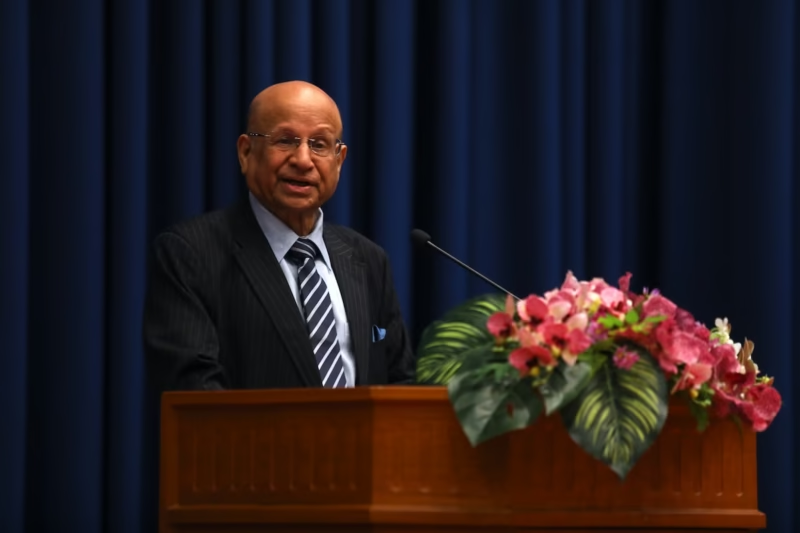
“Air pollution is ultimately about people. It affects pregnant mothers concerned about the air they breathe, elderly people whose health may already be vulnerable, and people with disabilities who face additional barriers to protecting themselves. Clean air must therefore be understood not only as an environmental objective, but also as a human right,” said Dr Bindu Lohani, Chair of the Board of Trustees, Clean Air Asia, in his conference summary.
Air pollution remains a major challenge across the region
Air pollution continues to affect the vast majority of people across Asia and the Pacific. More than 90 percent of the region’s population — around four billion people — are exposed to air pollution levels above health guidelines, while air pollution caused around 7.9 million premature deaths worldwide in 2023.
The economic cost is also significant, with the global cost of air pollution estimated to exceed US$8 trillion annually.
Despite these challenges, encouraging progress is emerging. Outdoor PM2.5 levels decreased in 47 percent of cities between 2014 and 2024, demonstrating that sustained policies and investment can deliver measurable improvements in air quality.
Key messages from BAQ 2026
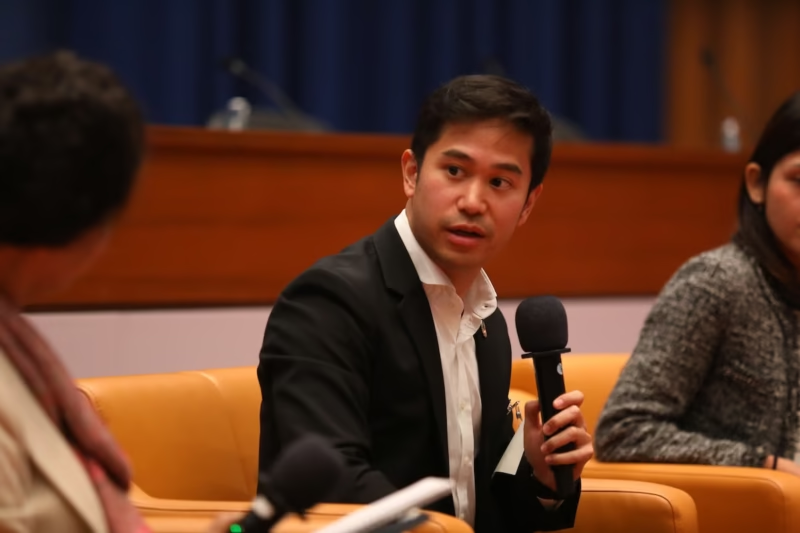
Discussions throughout the conference highlighted several priorities for accelerating clean air progress across the region.
Clean air must be treated as a development priority
Air pollution is not only an environmental issue but a major public health, economic, and social challenge. Addressing air pollution can reduce healthcare costs, strengthen productivity, and support sustainable economic growth.
Investment must scale rapidly
Participants emphasised that clean air initiatives currently receive only a small share of international development finance. Expanding financing will require stronger project preparation and greater mobilisation of private sector investment.
Proven solutions must be implemented at scale
Technologies and policy tools to reduce air pollution already exist across sectors such as transport, energy, industry, agriculture, and waste management. The challenge is accelerating their implementation.
Air pollution and climate action must be addressed together
Reducing short-lived climate pollutants such as methane and black carbon offers an opportunity to deliver rapid improvements in air quality while slowing near-term climate warming.
Cities must play a leading role
Urban areas are both major sources of emissions and key drivers of solutions. Strengthening city-level capacity and knowledge exchange can accelerate implementation.
Regional cooperation is essential
Because air pollution frequently crosses national borders, coordinated regional action and airshed-based approaches are critical to addressing shared pollution sources.
Better monitoring and data systems are needed
Reliable monitoring networks, emissions inventories, and transparent data systems are essential to support evidence-based policymaking and track progress.
Clean air transitions must prioritise people
Air pollution disproportionately affects children, older adults, and vulnerable communities, highlighting the importance of human-centred policies that prioritise public health.
Moving from dialogue to implementation
Participants emphasised that stronger collaboration between governments, development institutions, the private sector, philanthropy, civil society, and research organisations will be essential to accelerate clean air action across the region.
“If the conversations we have had here lead to stronger policies, new partnerships, greater investment, and real improvements in air quality across the region, then BAQ 2026 will have marked an important step towards clearer skies for the people of Asia and the Pacific,” said Bjarne Pedersen, Executive Director of Clean Air Asia.
As the conference concluded, participants highlighted the need to translate knowledge and commitments into concrete action — including scaling up investment, strengthening monitoring systems, integrating air quality into infrastructure planning, and expanding partnerships across the region. By strengthening cooperation and implementing proven solutions at scale, countries across Asia and the Pacific can move toward cleaner air, healthier communities, and more resilient development pathways. #