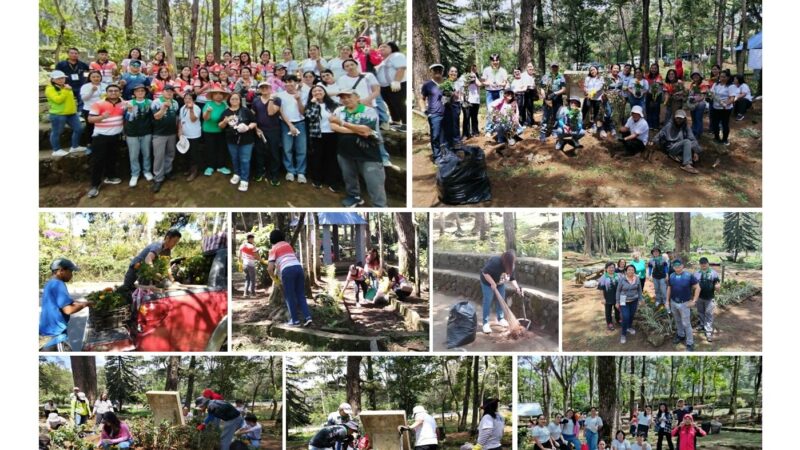
Baguio enhances urban forest, watershed management

The City Environment and Parks Management Office (CEPMO) had been able to enhance the city’s urban and forest watershed management that contributed in strengthening community participation for the preservation and protection of the state of the environment.
In a report during the regular Monday flag raising ceremony, the CEPMO produced some 23,210 seedlings from the Busol and Botanical nurseries of which 10,775 seedlings were planted across different planting sites around the city, aside from supervising the tree-caring and nurturing activities of eight partner organizations.
Further, some 2,922 seedlings were distributed to Baguio and Benguet residents through its PANTREE activities and other ecological fairs that were conducted during the year.
Under the mandatory tree-planting provisions of the city’s Environment Code, the CEPMO reported that some 796 Benguet pine trees were planted by marriage license applicants and 1,236 trees were planted by occupancy permit applicants in the different identified planting sites around the city.
Under regulatory compliance and emergency response, the CEPMO stated that 458 requests for emergency tree cutting and pruning permits were inspected and processed during the year.
From these activities, the CEPMO issued 367 emergency tree cutting and pruning permits, 10 retrieval permits and 23 transport permits.
The CEPMO also responded to different hazardous tree situations across the city to ensure public safety before, during and after the typhoons. Some 259 dead, hazardous or structurally compromised trees were cut while 187 trees were pruned to reduce risk to life and property.
Moreover, CEPMO’s cutting crew also continuously conducts pruning and cutting activities along road rights-of-way and city parks, and in other public places to maintain safety and prevent further potential hazards.
According to the CEPMO, recovered resources, including firewood and lumber were responsibly utilized and donated for community needs such as wakes, indigenous cultural practices, landscaping works, park improvements and other approved purposes.
Subsequently, the CEPMO claimed that other biodegradable materials were processed using the wood chipper and used as organic fertilizer and soil conditioner in various city parks. – Dexter A. See