
Ateneo de Manila convenes international symposium on AI

In the photo. Fr. Roberto Yap SJ welcomed over 120 delegates from Jesuit universities around the world to the first-ever symposium of the Global Research Alliance of Jesuit Universities (GRAJU). PHOTO CREDIT: Ateneo de Manila University
Over 120 scholars and more than 70 AI-focused studies from researchers and academic leaders of Jesuit universities around the world come together this week at the Ateneo de Manila University for the Inaugural Symposium of the Global Research Alliance of Jesuit Universities (GRAJU), marking a major milestone in global collaboration among Jesuit institutions of higher education.
Held from March 9 to 12, 2026, the symposium brings together scholars from leading Jesuit universities across Asia, Europe, and the Americas to explore the theme “The AI Frontier and the Distinctives of Global Jesuit Higher Education.” The gathering aims to foster dialogue on how emerging technologies, particularly artificial intelligence, are reshaping higher education, research, and the formation of future leaders.
“Artificial intelligence has redefined the way we learn, communicate, and interact with the world around us… It holds potential for human flourishing, but also carries risks of isolation, loss of work, and new forms of manipulation,” said Fr. Roberto C. Yap SJ, Ateneo de Manila University President, in his opening remarks.
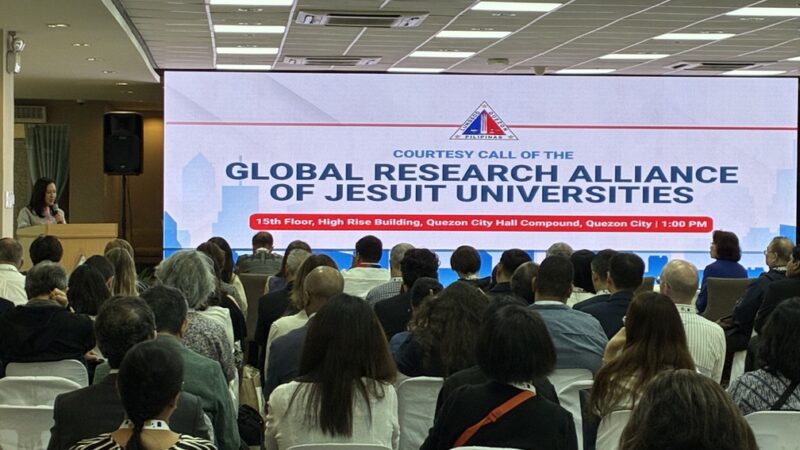
The first day of the symposium was highlighted by a visit to the Quezon City Hall and a courtesy call on Mayor Ma. Josefina “Joy” G. Belmonte—herself an alumna of Ateneo de Manila University.
“The tradition that unites our universities has always insisted that knowledge is not neutral; that it carries moral weight, and that it must be projected toward human dignity and the common good: Cura personalis—care for the whole person. That principle does not become less relevant in the age of AI. If anything, it becomes more necessary,” Belmonte said to the gathered guests.
The symposium provides a platform for participants to present research, exchange ideas, and develop collaborative initiatives addressing the opportunities and challenges posed by artificial intelligence in higher education. Discussions will span topics such as AI in Ignatian pedagogy, ethical and policy implications of emerging technologies, AI-enabled research and innovation, and new models of global academic collaboration.
Beyond academic presentations, the program includes research dialogues, networking sessions, and opportunities for scholars to explore future partnerships across institutions. Organizers hope the symposium will lead to joint research projects, collaborative publications, and new initiatives that deepen cooperation among Jesuit universities worldwide.
The Global Research Alliance of Jesuit Universities is an international research network established in 2025 to strengthen scholarly collaboration among Jesuit universities worldwide. Founding institutions include Ateneo de Manila University, Fordham University, Georgetown University, ITESO, Universidad Jesuita de Guadalajara, Sogang University, University of Deusto, and the University of Namur, united by a shared commitment to academic excellence, social justice, and research that serves the global common good.
By hosting the inaugural gathering, Ateneo de Manila University underscores its commitment to advancing global research collaboration while ensuring that technological innovation in higher education remains grounded in human dignity, ethical reflection, and service to society.
As the first major convening of the alliance, the GRAJU Symposium represents the beginning of a new chapter in Jesuit higher education, one that seeks to harness global scholarship and emerging technologies in pursuit of a more just, humane, and hopeful future. ###